Ladakh Stargazing Astro Tourism: Your Ultimate Cosmic Guide
Ladakh Stargazing & Astro Tourism
Unveil the wonders of the cosmos with our ultimate Ladakh stargazing and astro tourism guide. Discover best spots, tips, and how Mid Holidays enhances your…
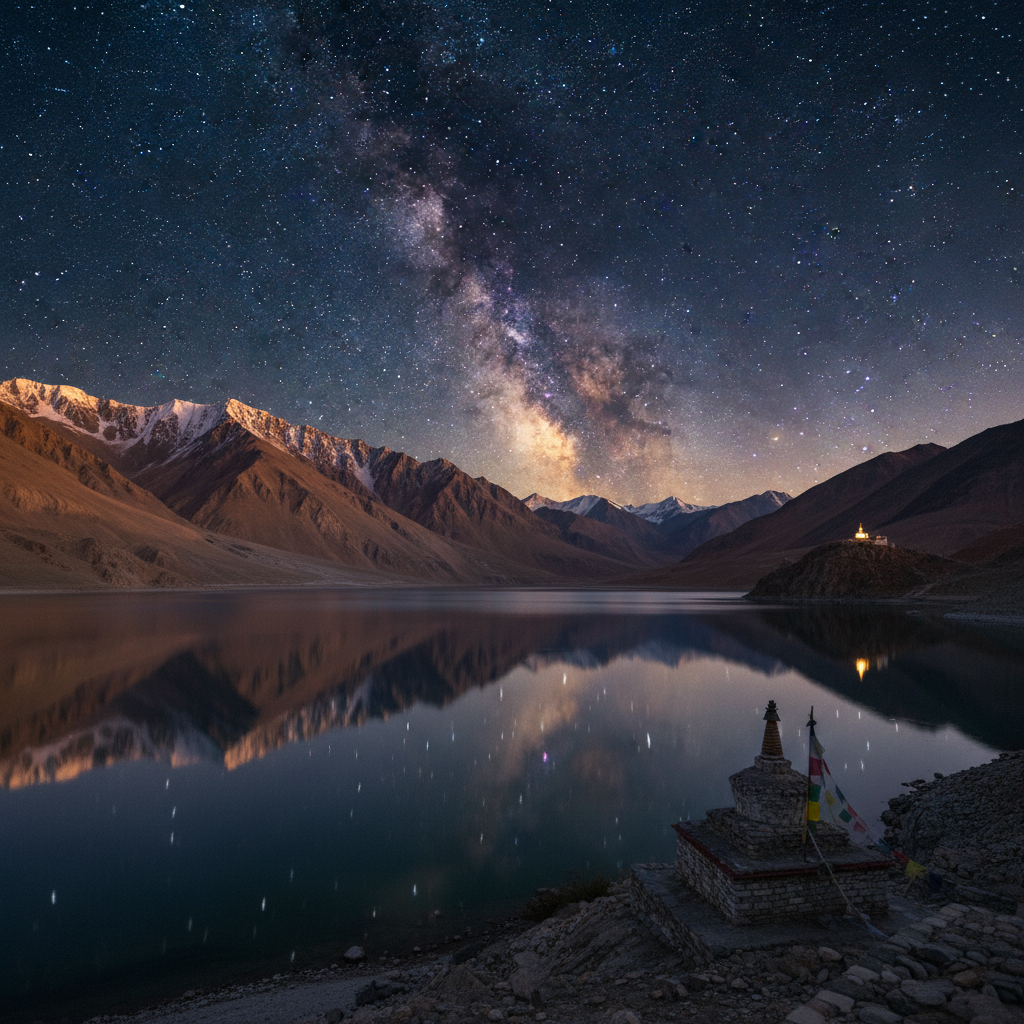
Embrace the Cosmos: An Introduction to Ladakh Stargazing and Astro Tourism
Imagine gazing upon a celestial canvas so vivid, so densely packed with stars, that the Milky Way itself feels within reach. This is the magic of Ladakh stargazing and astro tourism. Far from the light pollution of urban centers, Ladakh, nestled high in the Himalayas, offers some of the planet's darkest night skies, making it an unparalleled destination for astronomy enthusiasts and casual sky-gazers alike. The high altitude, arid climate, and sparse population contribute to crystal-clear visibility, revealing nebulae, galaxies, and meteor showers in breathtaking detail. Astro tourism in Ladakh isn't just about looking up; it's an immersive experience that connects you with ancient cosmic rhythms and offers a profound sense of perspective. Whether you're a seasoned astrophotographer seeking that perfect shot, a family wanting to introduce children to the wonders of the universe, or a solo traveler craving a moment of quiet contemplation under an infinite sky, Ladakh delivers an unforgettable journey into the heart of the cosmos. This guide will walk you through everything you need to know to plan your celestial adventure, from the best viewing spots to practical tips for making the most of Ladakh's extraordinary nightscapes.
Why Ladakh is a Stargazer's Paradise: Unique Factors for Clear Skies
Ladakh's unique geographical and climatic conditions converge to create an ideal environment for stargazing. Firstly, its high altitude, generally ranging from 10,000 to 18,000 feet (3,000 to 5,500 meters) above sea level, means there's less atmospheric interference between your eyes and the stars. The air is thinner and cleaner, reducing scattering and absorption of starlight. Secondly, Ladakh's arid, cold desert climate results in very low humidity and minimal cloud cover, especially during the peak tourist seasons. Clear, dry nights are the norm, offering consistently unobstructed views. Thirdly, and perhaps most crucially for astro tourism, Ladakh suffers from virtually no light pollution. With a low population density and limited urban development, artificial lights are scarce, allowing the natural radiance of the night sky to dominate. The local administration and communities are also increasingly aware of the value of these dark skies, with efforts underway to promote responsible lighting and establish dedicated dark sky reserves. All these factors combined make Ladakh not just a good spot, but arguably one of the best places globally for experiencing the true grandeur of the universe, making every night a potential spectacle.
Best Time to Visit for Optimal Stargazing Experiences
Choosing the right time to visit Ladakh is crucial for maximizing your stargazing opportunities. The prime window for astro tourism typically spans from May to October. During these months, the weather is relatively stable, mountain passes are open, and the skies are predominantly clear. Specifically, the monsoon season, which affects other parts of India, has minimal impact on Ladakh due to its rain shadow location, ensuring dry nights even then. However, to avoid even the slight haziness that can occur in early monsoon, late June to early September often offers the most consistently transparent skies. Mid-September to October brings crisp, cold air which further enhances visibility, though temperatures drop significantly, requiring warmer clothing. It's important to plan your trip around the lunar cycle; a new moon phase guarantees the darkest skies, allowing fainter celestial objects to be visible. Check the moon phase calendar before booking your dates to ensure optimal dark sky conditions. Avoid full moon periods if your primary goal is deep-sky observation, as the moon's brightness can wash out dimmer stars and nebulae. Always be prepared for cold nights, regardless of the month, as temperatures can drop considerably after sunset, even in summer.
Top Stargazing Spots in Ladakh: Where to Find the Darkest Skies
While almost anywhere outside Leh town offers excellent stargazing, certain locations in Ladakh stand out for their exceptional dark sky conditions and accessibility. Hanle, a remote village in eastern Ladakh, is arguably the crown jewel. Home to the Indian Astronomical Observatory, it boasts some of the darkest skies in India and is being developed as India's first Dark Sky Reserve. The vast, open plains and high altitude here provide an unobstructed 360-degree view of the heavens. Pangong Tso and Tso Moriri lakes also offer spectacular nightscapes, with the shimmering waters adding a unique reflective element to your photography. Imagine the Milky Way arching over the serene waters! Nubra Valley, particularly areas away from Diskit and Hunder villages, like Sumur or Turtuk (if permissible for overnight stay), also offers excellent conditions. Even closer to Leh, places like Lamayuru or the Chang La pass area, while slightly more accessible, still provide vastly superior viewing compared to any city. When choosing your spot, consider remoteness, altitude, and proximity to any artificial lights. The further you are from settlements, the better your chances of an truly immersive cosmic experience.
Planning Your Astro Tourism Trip: Permits, Accommodation, and Logistics
Planning an astro tourism trip to Ladakh requires attention to detail. Firstly, Inner Line Permits (ILPs) are mandatory for Indian nationals to visit restricted areas like Hanle, Pangong, and Nubra Valley, which are prime stargazing spots. Foreign nationals require Protected Area Permits (PAPs). These can often be obtained online or through a local travel agent in Leh, saving you time. Accommodation options vary by location; Leh offers hotels and guesthouses, while more remote areas like Hanle or around the lakes will have guesthouses, homestays, or tented camps. Booking in advance, especially during peak season, is highly recommended. For transportation, hiring a private taxi is the most convenient way to reach these remote stargazing locations. Be sure to negotiate a return fare that includes waiting time. Consider joining a specialized astro tour if you prefer a guided experience with equipment provided. Acclimatization to Ladakh's high altitude is critical; spend at least two full days in Leh before venturing to higher regions. Carry sufficient warm clothing, a headlamp with a red light setting (to preserve night vision), and plenty of water. Local tour operators like Mid Holidays can assist with all these arrangements, ensuring a seamless and well-organized celestial adventure.
Essential Gear for Stargazers and Astrophotographers
Whether you're a casual observer or a dedicated astrophotographer, having the right gear enhances your Ladakh stargazing experience significantly. For general observation, a good pair of binoculars (7x50 or 10x50 are popular choices) will reveal countless stars invisible to the naked eye and offer stunning views of the moon and brighter planets. If you're serious about seeing deep-sky objects like nebulae and distant galaxies, a portable telescope (a Dobsonian or a smaller refractor on an equatorial mount) is ideal, though challenging to transport. Astrophotographers will need a DSLR or mirrorless camera with manual settings, a sturdy tripod, a wide-angle lens with a fast aperture (f/2.8 or wider), a remote shutter release, and extra batteries (cold drains them quickly). A headlamp with a red light mode is indispensable for navigating in the dark without compromising your night vision or disturbing others. Warm clothing, including thermal layers, a heavy jacket, gloves, and a woolly hat, is non-negotiable as temperatures plummet after sunset. Also pack a comfortable chair or mat for extended viewing sessions, and a thermos with hot beverages to stay warm. Remember that Mid Holidays can often arrange for local guides who might provide basic telescopes or binoculars as part of their tour packages, if you prefer not to carry heavy equipment.
Safety, Etiquette, and Responsible Astro Tourism in Ladakh
Safety and responsible conduct are paramount when stargazing in Ladakh's remote areas. Altitude sickness (AMS) is a real concern; acclimatize properly in Leh for at least two days before heading to higher altitudes. Stay hydrated, avoid alcohol, and consult a doctor if symptoms persist. Always inform your accommodation or guide about your plans if you're venturing out alone at night. When driving, exercise extreme caution on dark, unlit roads. Regarding etiquette, maintain silence and avoid loud noises that can disturb others trying to observe or photograph. Most importantly, preserve night vision by using only red light on your headlamp; white light can temporarily blind fellow stargazers for up to 20-30 minutes. Be respectful of local culture and traditions, especially in villages like Hanle where the observatory operates. Leave no trace of your visit; carry back all your trash. Supporting local homestays and businesses contributes to the community. As Ladakh develops its astro tourism potential, it's crucial that visitors help in maintaining its pristine dark skies and fragile ecosystem. Responsible tourism ensures that future generations can also enjoy the breathtaking cosmic spectacle that Ladakh offers.
Related Kashmir Guides & Services
<p>Planning the rest of your trip? These Mid Holidays guides pair well with this article:</p><ul><li><a href="/blog/leh-ladakh-best-time-to-visit-month-wise">Leh Ladakh Best Time to Visit Month-Wise: Your Ultimate Guide</a></li><li><a href="/blog/best-time-to-visit-bangus-valley-kashmir">Best Time to Visit Bangus Valley: Your Ultimate Guide to Kashmir's Hidden Gem</a></li><li><a href="/blog/tulail-valley-tour-kashmir-hidden-paradise">Tulail Valley Tour: Your Guide to Kashmir's Hidden Paradise</a></li><li><a href="/blog/khardung-la-pass-complete-guide">Khardung La Pass Complete Guide: Conquering the Himalayan Giant</a></li><li><a href="/blog/leh-to-chang-la-taxi-service">Leh to Chang La Taxi Service: Your Ultimate High-Altitude Journey Guide</a></li></ul>
Frequently Asked Questions
Is it possible to see the Milky Way clearly in Ladakh?
Absolutely! Ladakh is renowned for its incredibly dark skies, making it one of the best places in India, and indeed the world, to witness the Milky Way with the naked eye. Away from the light pollution of towns, particularly in areas like Hanle, Nubra Valley, and around Pangong Tso or Tso Moriri, the Milky Way appears as a magnificent, luminous band stretching across the sky, often with discernible structures and star clusters visible without a telescope.
Do I need any special permits for stargazing in remote areas like Hanle?
Yes, to visit remote areas like Hanle, Pangong Lake, and Nubra Valley, which are prime stargazing locations, Indian nationals require an Inner Line Permit (ILP), and foreign nationals need a Protected Area Permit (PAP). These permits can be obtained online or through a local travel agent in Leh. It's advisable to secure them a few days before your planned visit to these restricted zones.
Can I do astrophotography in Ladakh, and what gear do I need?
Ladakh is a dream destination for astrophotography. You'll need a DSLR or mirrorless camera with manual settings, a wide-angle lens (f/2.8 or wider is ideal), a sturdy tripod, a remote shutter release, and extra batteries (cold weather drains them quickly). A headlamp with a red light mode is also essential for working in the dark without ruining your night vision or others'.
What are the common challenges for stargazing in Ladakh?
The primary challenges include high altitude sickness (AMS), which requires proper acclimatization in Leh for at least two days. Extremely cold temperatures at night, even in summer, necessitate warm clothing. Transport to remote areas can also be an issue, often requiring a hired private taxi. Lastly, planning around the moon cycle is important; a full moon can significantly reduce visibility of fainter objects.
Are there any guided astro tourism tours available in Ladakh?
Yes, several local tour operators and guides in Leh specialize in astro tourism. These tours often include transportation to prime stargazing spots, provide basic equipment like binoculars or telescopes, and sometimes feature expert guides who can identify constellations and celestial objects. They can be a great option for those new to stargazing or who prefer a hassle-free experience.
Is Hanle indeed the best place for stargazing in Ladakh, and why?
Hanle is widely considered the best place for stargazing in Ladakh, primarily due to its extreme remoteness, very high altitude (around 4,500 meters or 14,800 feet), and the presence of the Indian Astronomical Observatory. This combination results in exceptionally dark skies with minimal light pollution and excellent atmospheric conditions, offering unparalleled clarity for viewing celestial phenomena. It's also being developed as India's first Dark Sky Reserve.
What's the difference between a new moon and a full moon for stargazing?
A new moon phase is ideal for stargazing because the moon is not visible, allowing the fainter light from distant stars, galaxies, and nebulae to be seen without being washed out. During a full moon, the moon's brightness illuminates the night sky significantly, acting as a natural light source that makes it difficult to observe less luminous celestial objects, though it's great for lunar photography.