Kashmir Stargazing: Your Ultimate Guide to Best Locations & Tips
Kashmir Night Sky Exploration
Uncover Kashmir stargazing's magic with our ultimate guide. Discover the best locations, essential tips, and ideal times for an unforgettable celestial…
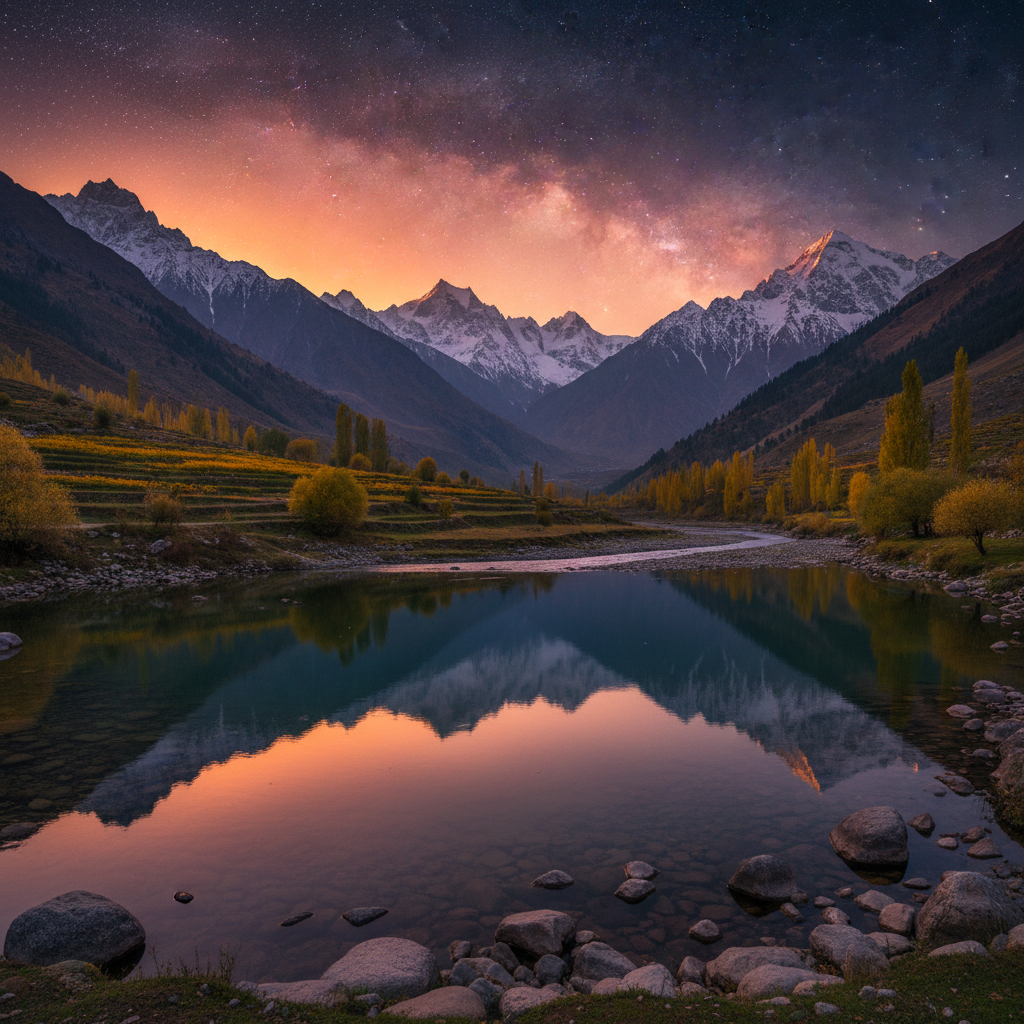
Kashmir Stargazing: An Overview of the Celestial Canvas
Imagine a night sky so clear, so vast, that the Milky Way appears as a luminous river overhead, and countless stars shimmer like scattered diamonds. This is the magic of Kashmir stargazing, an experience far removed from the light pollution of cities. Nestled amidst the mighty Himalayas, Kashmir offers some of India's most pristine dark-sky locations, making it an emerging paradise for amateur astronomers and astrophotographers alike. Unlike popular day-time activities, stargazing here provides a tranquil, awe-inspiring connection with the cosmos. It's an opportunity to witness meteors streaking across the velvet black, identify constellations with astonishing clarity, and perhaps even glimpse a planet or two through binoculars or a telescope. This guide will take you through the best locations, the optimal times, and essential tips to make your Kashmir stargazing adventure truly unforgettable. We'll focus on accessible yet sufficiently remote spots that promise minimal light interference and maximum celestial spectacle. Remember, the beauty of the Kashmir night sky is a unique spectacle, offering a perspective on our universe that few places can match.
Why Kashmir for Stargazing? Ideal Conditions Explained
Kashmir's unique geographical and atmospheric conditions make it an exceptional destination for stargazing. Firstly, its high altitude, particularly in locations like Sonamarg and higher reaches of Pahalgam, means thinner air and significantly less atmospheric distortion, allowing for clearer views of celestial objects. Secondly, and most importantly, Kashmir boasts vast expanses of sparsely populated areas, particularly beyond the main towns, which translate to minimal light pollution. Away from Srinagar and other major settlements, the ambient light at night is negligible, creating genuinely dark skies. The mountains themselves act as natural barriers, shielding many valleys from distant light sources. Furthermore, the generally dry climate, especially during certain seasons, reduces cloud cover, leading to more cloudless nights ideal for observation. While a clear sky is never guaranteed, the probability is much higher here than in most other accessible regions of India. The crisp, clean air, combined with the sheer majesty of the Himalayan backdrop, adds another layer of wonder to the stargazing experience, making it a holistic engagement with nature.
Best Time and Season for Your Stargazing Trip
Timing is crucial for a successful Kashmir stargazing experience. The best period generally spans from late spring (May) to early autumn (October), when the skies are typically clearer and the weather is more stable and pleasant. Within this window, the months of June, September, and early October often offer the most consistently clear nights. Avoid the monsoon season (July-August) as heavy cloud cover and rain will obscure any view of the stars. Winter months (November-April) can also offer incredibly clear, crisp skies due to low humidity, but the extreme cold and heavy snowfall in many high-altitude areas make accessibility and comfort challenging. If you do brave winter, ensure you are fully prepared for sub-zero temperatures. Beyond the season, consider the lunar cycle: plan your trip around the new moon phase. A new moon means no lunar illumination, allowing fainter stars and the Milky Way to appear much brighter and more distinct. Check a lunar calendar before booking to maximize your dark sky viewing potential. Even a half-moon can significantly impact visibility for deep-sky objects, so timing it with a new moon is highly recommended for the best experience.
Top Stargazing Locations: Where to Find the Darkest Skies
Kashmir offers several prime spots for an unparalleled stargazing experience. One of the absolute best is Gurez Valley, specifically areas like Chakwali or the higher reaches of Dawar. Its remote location, far from any significant towns, ensures truly dark skies. Expect a 6-8 hour drive from Srinagar, with road conditions varying but generally motorable during summer. Another excellent choice is Sonamarg, particularly the Thajiwas Glacier area or camping spots further up the valley, away from the main resort lights. The high altitude here provides fantastic clarity. Pahalgam, especially beyond the main market towards Betaab Valley or Chandanwari, offers good opportunities, although light pollution is slightly more present than in Gurez or remote Sonamarg. For a truly wild experience, exploring the upper reaches of Warwan Valley, accessible from Kishtwar, promises incredibly dark skies but requires adventurous trekking and robust planning. Doodhpathri also offers potential for good stargazing, particularly if you venture slightly off the main tourist trail after sunset. Always prioritize locations with minimal human habitation and ample distance from artificial lights for the most rewarding celestial show.
Planning Your Stargazing Trip: Logistics and Accommodation
Planning your Kashmir stargazing trip requires careful consideration of logistics. For remote locations like Gurez, it's essential to arrange transportation well in advance. Shared taxis or private cabs are available from Srinagar. Expect fares for a private taxi to Gurez to be in the range of INR 8,000-12,000 for a return trip, depending on duration and negotiation. In Gurez, accommodation is limited to basic guesthouses or homestays, ranging from INR 1,500-3,000 per night. Booking ahead is crucial, especially during peak season. For Sonamarg and Pahalgam, more hotel options exist, from budget guesthouses (INR 2,000-4,000) to mid-range hotels (INR 5,000-8,000+). Camping is often the best way to get truly immersed in the dark sky experience. Many tour operators can arrange guided camping trips to suitable stargazing sites, providing tents, meals, and experienced guides. If self-camping, ensure you have proper permits (if required for specific areas, though generally not for typical tourist spots), and always inform local authorities or your accommodation provider of your plans. Pack warm layers, even in summer, as mountain nights can get very cold. Consider carrying a portable power bank for your devices and a headlamp with a red light mode to preserve night vision.
Essential Gear and Tips for a Rewarding Experience
To make the most of your Kashmir stargazing adventure, a few essential items and tips will greatly enhance your experience. Firstly, always pack multiple warm layers, including thermal wear, a good fleece, and a windproof jacket, as temperatures drop significantly after sunset, even in summer. A warm hat, gloves, and thick socks are non-negotiable. Bring a red-light headlamp or flashlight; white light can ruin your night vision for up to 30 minutes. Binoculars (10x50 are a good all-rounder) are excellent for enhancing views of nebulae, star clusters, and the moon's craters. If you're serious, a portable telescope can offer even more detail. A comfortable portable chair or mat to lie on will make long observation sessions much more enjoyable. Don't forget bug repellent, a power bank, and plenty of water or a hot flask. Before you go, download a stargazing app (like SkyView Lite or Stellarium) to help identify constellations and celestial objects. Give your eyes at least 20-30 minutes to adapt to the darkness for optimal viewing. Lastly, respect the local environment; leave no trace behind and be mindful of local customs and privacy if you are near villages.
Astrophotography in Kashmir: Capturing the Cosmos
Kashmir's dark skies present an incredible canvas for astrophotography, from capturing the majestic arc of the Milky Way to star trails and even planetary conjunctions. To embark on this visual journey, you'll need some specific gear: a DSLR or mirrorless camera with good low-light performance, a wide-angle lens (f/2.8 or wider is ideal) to capture more light, a sturdy tripod to eliminate camera shake during long exposures, and a remote shutter release or intervalometer. Start by manually focusing your lens to infinity, and set your camera to manual mode. Common settings for Milky Way shots include an aperture of f/2.8 (or widest available), ISO between 3200-6400, and a shutter speed of 15-30 seconds (use the 500 rule: 500 divided by your focal length to avoid star trailing). Experiment with these settings based on your lens and the ambient darkness. For star trails, you'll need multiple long exposures stitched together, or a very long single exposure if your camera can handle it without too much noise. Always shoot in RAW format for maximum flexibility in post-processing. Research moon phases and Milky Way visibility charts for your chosen dates and location. The clear, unpolluted skies of Kashmir offer truly breathtaking opportunities to immortalize the beauty of the cosmos.
Local Etiquette, Safety, and Environmental Responsibility
When enjoying the pristine night skies of Kashmir, it's vital to observe local etiquette and prioritize safety and environmental responsibility. Always seek permission if you plan to set up equipment or camp on private land, even if it appears vacant. Locals are generally hospitable, but a polite request goes a long way. Maintain a low profile and avoid making excessive noise, particularly late at night, out of respect for local communities. For safety, it’s always best to stargaze with at least one companion. Inform your accommodation or a local guide of your plans, especially if heading to a remote spot. Carry a fully charged phone and a power bank. Be aware of your surroundings, as wildlife may be present in some remote areas. Environmentally, the principle of 'Leave No Trace' is paramount. Pack out everything you pack in, including all waste. Avoid disturbing flora and fauna. Do not light bonfires indiscriminately, as even a small fire can contribute to light pollution and poses a risk to the environment. The goal is to preserve the natural darkness and beauty of these locations for future generations of stargazers. Considering a guided tour can often enhance both safety and local insight for your stargazing adventure. Mid Holidays also offers bespoke tours that can include unique stargazing experiences in remote and safe locations across Kashmir.
Related Kashmir Guides & Services
<p>Planning the rest of your trip? These Mid Holidays guides pair well with this article:</p><ul><li><a href="/blog/khardung-la-pass-complete-guide">Khardung La Pass Complete Guide: Conquering the Himalayan Giant</a></li><li><a href="/blog/pampore-saffron-fields-visit-guide">Pampore Saffron Fields Visit Guide: Kashmir's Golden Bloom</a></li><li><a href="/blog/best-month-to-visit-gurez-valley">Best Month to Visit Gurez Valley: Your Ultimate Mid Holidays Guide</a></li><li><a href="/blog/leh-ladakh-best-time-to-visit-month-wise">Leh Ladakh Best Time to Visit Month-Wise: Your Ultimate Guide</a></li><li><a href="/blog/leh-to-chang-la-taxi-service">Leh to Chang La Taxi Service: Your Ultimate High-Altitude Journey Guide</a></li></ul>
Frequently Asked Questions
Can I see the Milky Way clearly from Kashmir?
Yes, absolutely! Kashmir offers some of the best conditions in India to view the Milky Way. Remote locations like Gurez Valley, parts of Sonamarg, and higher altitudes in Pahalgam, especially during a new moon phase between May and October, provide incredibly dark skies. With minimal light pollution and clear atmospheric conditions, the Milky Way often appears as a distinct, luminous band across the sky, visible to the naked eye.
Do I need special equipment for stargazing in Kashmir?
While you can enjoy the incredible night sky with just your naked eyes, a pair of binoculars (e.g., 10x50) will significantly enhance your experience, allowing you to see more stars, star clusters, and lunar details. A portable telescope is a bonus for deep-sky objects. Don't forget a red-light headlamp, warm clothing, and a comfortable mat or chair for prolonged viewing.
Is it safe to stargaze in remote areas of Kashmir at night?
Stargazing in remote areas requires caution, like any wilderness activity at night. It is generally safe, especially if you go with a local guide or as part of an organized tour. Always inform your guesthouse or a trusted person of your plans. Stargaze in groups, carry a fully charged phone, and be aware of your surroundings. Stick to well-known and accessible dark sky locations rather than venturing into completely unknown territory.
What is the impact of light pollution in Kashmir on stargazing?
While major towns like Srinagar have significant light pollution, many areas in Kashmir, particularly the valleys further away from urban centers, are still relatively untouched. The most pristine dark skies are found in remote valleys like Gurez and Warwan, or in higher altitude regions such as specific parts of Sonamarg and Pahalgam. Choosing locations strategically helps minimize light interference for optimal viewing.
Are there any guided stargazing tours available in Kashmir?
While not as widely advertised as other tours, some local tour operators and adventure companies in Kashmir are beginning to offer customized stargazing experiences, especially as dark sky tourism grows. These tours often include transportation to prime locations, basic equipment, and sometimes even a knowledgeable guide. Inquire with local travel agencies like Mid Holidays for bespoke arrangements.
Can I do astrophotography in Kashmir?
Absolutely! Kashmir's dark and clear skies offer fantastic opportunities for astrophotography. You'll need a DSLR or mirrorless camera, a wide-angle lens (f/2.8 or faster), a sturdy tripod, and a remote shutter release. Locations with minimal light pollution and a clear view of the horizon, such as remote parts of Gurez or Sonamarg, are ideal for capturing stunning images of the Milky Way and star trails.
What should I wear for stargazing in Kashmir, even in summer?
Even during summer months (May-October), mountain nights in Kashmir can get surprisingly cold, especially at higher altitudes. It's crucial to wear multiple warm layers. This includes thermals, a fleece jacket, a windproof and waterproof outer layer, a warm hat that covers your ears, gloves, and thick wool socks. Proper footwear is also essential to stay comfortable during long observation periods.