Kashmir's History & Mughal Era: An In-Depth Guide
Kashmir Heritage & Mughal Influence
Explore Kashmir's rich history, from ancient roots to the grandeur of the Mughal era, with this comprehensive guide. Discover iconic gardens, architectural…
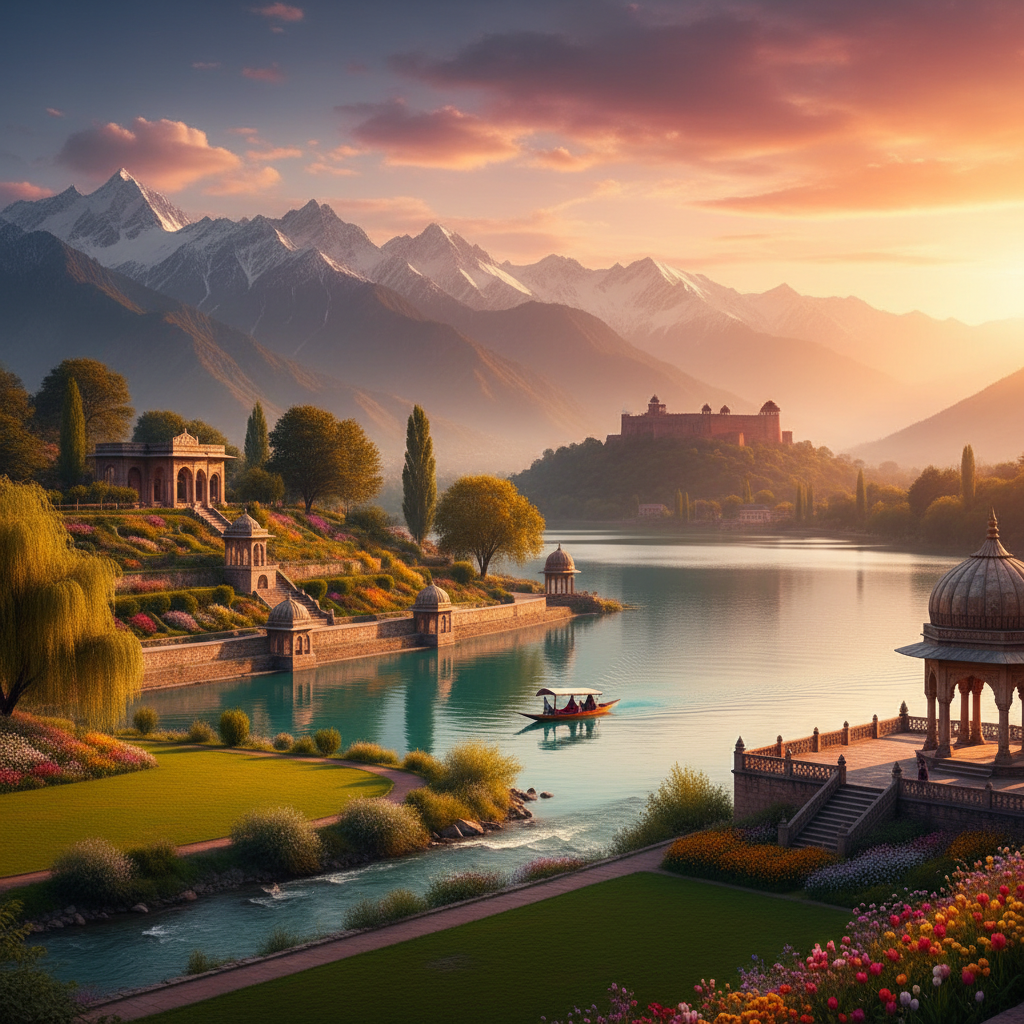
An Introduction to Kashmir's Storied Past
Kashmir, often called 'Paradise on Earth,' boasts a history as rich and layered as its stunning landscapes. Beyond the picturesque valleys and serene lakes lies a profound past, shaped by diverse empires, spiritual movements, and cultural fusions. This guide delves into the historical tapestry of Kashmir, with a particular focus on the transformative Mughal era. Understanding Kashmir's history isn't just about dates and rulers; it's about appreciating the deep roots of its unique identity, its vibrant arts, and the resilient spirit of its people. From ancient Hindu and Buddhist kingdoms to the arrival of Islam and the subsequent flourishing under the Mughals, each period has left an indelible mark. Our journey begins long before the Mughals, exploring the indigenous traditions and early rulers that laid the groundwork for future civilizations. We'll trace the philosophical currents, architectural styles, and societal structures that evolved over centuries, setting the stage for one of Kashmir's most celebrated periods. For any traveler or history enthusiast, grasping this historical context elevates the experience of visiting Kashmir, allowing for a deeper connection with its monuments, traditions, and the very air of the valley. Mid Holidays believes in enriching your travel with knowledge, making your exploration of Kashmir not just a sightseeing trip, but a journey through time itself.
Ancient Foundations: From Hindu Kingdoms to Buddhist Flourishing
Before the advent of Islam and the Mughals, Kashmir was a vibrant center of Hindu and Buddhist cultures. Early texts like Kalhana's Rajatarangini, a Sanskrit chronicle from the 12th century, provide invaluable insights into the valley's ancient history, tracing a lineage of kings and significant events. One of the most influential early dynasties was the Karkota dynasty (circa 7th-8th century CE), under whose rule Kashmir saw significant territorial expansion and artistic development. Lalitaditya Muktapida, a powerful Karkota king, is credited with constructing grand temples and patronizing art, leaving behind monumental ruins like those of the Martand Sun Temple near Anantnag, a testament to his architectural vision. Buddhism also thrived in Kashmir for centuries, particularly during the Kushan period (1st-3rd century CE). The valley became a crucial center for Buddhist scholarship, attracting monks and scholars from across Asia. The 4th Buddhist Council is believed to have been held in Kashmir, highlighting its importance as a hub for propagating Buddhist philosophy. The fusion of Hindu and Buddhist art and philosophy created a unique syncretic culture, visible in the archaeological remains and historical narratives. This period established Kashmir as a melting pot of intellectual and spiritual ideas, a legacy that continued to influence its cultural landscape for centuries to come.
The Rise of Islamic Rule and the Sultanate Period
The introduction of Islam to Kashmir was a gradual process, primarily through Sufi saints and missionaries starting around the 13th and 14th centuries, rather than through military conquest. One of the most prominent figures was Mir Sayyid Ali Hamadani, a Persian Sufi mystic who arrived in the 14th century, bringing with him not only spiritual teachings but also artisans and crafts that significantly influenced Kashmiri culture and economy. The first independent Muslim ruler of Kashmir was Shah Mir, who established the Shah Mir dynasty in 1339. Under his successors, notably Sultan Zain-ul-Abidin (1420-1470), also known as 'Budshah' (the Great King), Kashmir experienced a golden age. Sultan Zain-ul-Abidin was renowned for his patronage of arts, crafts, and learning. He encouraged the revival of Sanskrit studies, promoted local industries like shawl weaving and papier-mâché, and fostered religious tolerance, earning him deep respect across all communities. He also introduced canal irrigation, built bridges, and established libraries. The Sultanate period laid the foundation for Kashmir's famed craftsmanship and its tradition of syncretic religious harmony, blending indigenous traditions with Islamic Sufi philosophies. This era refined Kashmir's unique cultural identity, setting the stage for the arrival of the mighty Mughals.
The Mughal Era: Kashmir's Golden Age of Gardens and Art
The Mughal Empire, under Emperor Akbar, annexed Kashmir in 1586, marking the beginning of an era that profoundly shaped the valley's landscape, architecture, and cultural ethos. The Mughals, particularly Jahangir and Shah Jahan, were enamored with Kashmir's natural beauty and transformed it into their summer retreat, creating some of the most exquisite gardens the world has ever seen. These terraced gardens, inspired by Persian charbagh style, are characterized by flowing water, intricate fountains, pavilions, and diverse flora, meticulously designed to complement the surrounding natural beauty. Emperor Jahangir, who visited Kashmir numerous times, famously declared, 'If there is a paradise on earth, it is this, it is this, it is this!' He and his empress, Nur Jahan, are credited with commissioning the Shalimar Bagh and Nishat Bagh, among others. Shah Jahan continued this legacy, adding significant elements and creating the Chashma Shahi garden. These gardens, beyond their aesthetic appeal, were places of leisure, political gatherings, and artistic inspiration. The Mughal period also saw the introduction of new architectural styles, advancements in arts like miniature painting, and further development of Kashmiri crafts, solidifying Kashmir's reputation as a cultural and artistic hub within the vast Mughal Empire. Visiting these gardens today in Srinagar, like Shalimar Bagh, Nishat Bagh, and Chashma Shahi, provides a direct link to this opulent chapter of Kashmir's history.
Key Mughal Emperors and Their Legacy in Kashmir
Several Mughal emperors left a distinct mark on Kashmir. Emperor Akbar, who initiated the Mughal rule in Kashmir, focused on integrating the region into the empire's administration and economy. He ensured stability and encouraged trade, though his direct architectural contributions were fewer compared to his successors. It was under his son, Jahangir, that Kashmir truly blossomed as a Mughal paradise. Jahangir was a keen naturalist and a lover of beauty, which drew him repeatedly to the valley. He, along with his equally aesthetic-minded wife Nur Jahan, personally supervised the creation of the grand Shalimar Bagh and was deeply involved in its design, often spending months enjoying its serene beauty. Shah Jahan, Jahangir's son, continued the tradition of lavish construction. He further enhanced the Mughal gardens and commissioned the construction of the Pari Mahal (Fairy Palace) on the Zabarwan mountain range, an architectural marvel that served as a library and observatory. Aurangzeb, though less frequent in his visits due to his focus on military campaigns, also contributed to Kashmir's infrastructure, notably maintaining the existing gardens and travel routes. The legacy of these emperors is not just in stone and mortar, but also in the rich cultural blend they fostered, influencing everything from the local cuisine to the traditional dress and the very rhythm of life in the valley. Their love for Kashmir cemented its image as an idyllic retreat, an image that endures to this day.
Architectural Marvels and Cultural Contributions of the Mughals
The Mughals were master builders, and their architectural contributions to Kashmir are among the region's most iconic landmarks. The terraced gardens, such as Shalimar Bagh, Nishat Bagh, and Chashma Shahi, are prime examples of Mughal landscape architecture, integrating water features, diverse flora, and strategic viewpoints. These gardens weren't merely decorative; they were designed with precise symmetry and philosophical meaning, reflecting the concept of paradise. Beyond the gardens, structures like the Pari Mahal, a seven-terraced garden palace, demonstrate Mughal engineering prowess and aesthetic sensibility, blending Persian and indigenous styles. Culturally, the Mughal era was a period of great artistic exchange. Persian art, literature, and cuisine found fertile ground in Kashmir, blending seamlessly with local traditions. The exquisite Pashmina shawls, which had existed prior, gained further patronage and refinement, becoming a luxury item coveted across the world. Calligraphy, miniature painting, and wood carving also flourished under royal patronage. The introduction of specific fruits, flowers, and even cooking techniques from Central Asia enriched the Kashmiri way of life. The Mughal influence is still palpable in the local language, customs, and the proud craftsmanship that Kashmir is famous for, making the valley a living museum of this glorious past.
Post-Mughal Decline and the Path to Modern Kashmir
Following the decline of the mighty Mughal Empire after Aurangzeb's death in 1707, Kashmir entered a period of instability and successive foreign rule. The Afghans, under Ahmed Shah Durrani, took control in 1753, initiating a period that is often remembered for its harsh administration and economic exploitation. While the Afghans did leave some architectural imprints, such as the Sher Garhi Palace in Srinagar, their rule was largely characterized by heavy taxes and repression, leading to a significant outflow of wealth and talent from the valley. This period lasted for nearly 70 years, leaving the region exhausted. The Sikhs, led by Maharaja Ranjit Singh, conquered Kashmir in 1819, ending Afghan rule. The Sikh period brought a degree of stability but also continued the tradition of heavy taxation, particularly on the shawl industry. However, it also saw some infrastructural development and the integration of Kashmir into a larger regional power structure. In 1846, after the First Anglo-Sikh War, the British, through the Treaty of Amritsar, sold Kashmir to Maharaja Gulab Singh of the Dogra dynasty, marking the beginning of Dogra rule. This era saw the consolidation of the region into the princely state of Jammu and Kashmir, lasting until 1947, when the state's accession to India ushered in the modern chapter of Kashmir's complex and ongoing history. Each of these post-Mughal transitions further shaped the unique socio-political fabric of the valley.
Experiencing Kashmir's History Today: A Traveler's Perspective
For today's traveler, Kashmir's rich history is not just confined to books; it's alive in its landscapes, monuments, and vibrant culture. A visit to Srinagar offers a tangible connection to the Mughal era through its magnificent gardens: Shalimar Bagh, Nishat Bagh, and Chashma Shahi, where you can still feel the grandeur and artistry of a bygone age. Exploring the ruins of the Martand Sun Temple takes you back to the Karkota dynasty, offering a glimpse into ancient Hindu architectural prowess. The Jama Masjid, with its unique Indo-Saracenic architecture, showcases the blend of Islamic and indigenous styles from the Sultanate period. Beyond the major sites, simply wandering through the old city of Srinagar, with its traditional wooden houses and intricate Kashmiri craftsmanship, reveals centuries of continuous cultural evolution. The local cuisine, the intricate Pashmina weaving, the vibrant papier-mâché art – all carry the echoes of the various historical periods. Engage with local artisans, listen to folk tales, and visit historical shrines to truly immerse yourself. A historical tour of Kashmir is a journey of discovery, allowing you to connect with the soul of this remarkable land. Mid Holidays can help you curate an itinerary that not only showcases Kashmir's natural beauty but also its profound historical depth.
Related Kashmir Guides & Services
<p>Planning the rest of your trip? These Mid Holidays guides pair well with this article:</p><ul><li><a href="/blog/kashmir-polo-sport-heritage-guide">Kashmir Polo Sport Heritage Guide: A Journey Through Time</a></li><li><a href="/blog/ladakh-monastery-circuit-guide">Ladakh Monastery Circuit Guide: Exploring Ancient Buddhist Heritage</a></li><li><a href="/blog/kashmir-summer-vs-winter-travel-guide">Kashmir in Summer vs Winter: Which Season is Best For Your Trip?</a></li><li><a href="/blog/mughal-road-shopian-poonch-guide">Mughal Road Shopian Poonch Guide: Your Journey Through Kashmir's Historic Path</a></li><li><a href="/blog/papier-mache-walnut-wood-handicrafts-guide">Kashmiri Papier Mache & Walnut Wood Handicrafts Guide</a></li></ul>
Frequently Asked Questions
Who ruled Kashmir before the Mughals?
Before the Mughals, Kashmir was successively ruled by various indigenous Hindu dynasties, most notably the Karkotas, Utpalas, and Loharas. Following these, the Shah Mir dynasty established the first independent Muslim Sultanate in 1339. This Sultanate period, particularly under rulers like Sultan Zain-ul-Abidin, saw significant cultural and economic flourishing before the region was annexed by the Mughal Empire in 1586.
What is the significance of the Mughal gardens in Kashmir?
The Mughal gardens in Kashmir, such as Shalimar Bagh, Nishat Bagh, and Chashma Shahi, are significant for several reasons. They exemplify the charbagh style of Persian architecture, representing a terrestrial paradise. Commissioned by emperors like Jahangir and Shah Jahan, these gardens were integral to Mughal court life, serving as summer retreats, places for recreation, and settings for political and artistic gatherings. They beautifully integrate natural landscapes with elaborate water channels, fountains, and pavilions, showcasing exquisite Mughal aesthetic and engineering skills.
Which Mughal emperor contributed most to Kashmir?
Emperor Jahangir is widely regarded as the Mughal emperor who contributed most significantly to Kashmir. Deeply enamored with the valley's beauty, he visited it numerous times and, along with his empress Nur Jahan, personally oversaw the creation of several iconic Mughal gardens, including the Shalimar Bagh. His profound affection for Kashmir is immortalized in his famous quote about it being paradise on Earth, and his patronage led to a golden age of landscape architecture and arts in the region.
What is the Rajatarangini and why is it important?
The Rajatarangini, meaning 'River of Kings,' is a historical chronicle of Kashmir written in Sanskrit by the Kashmiri historian Kalhana in the 12th century CE. It is a vital and nearly singular source for understanding the ancient and medieval history of Kashmir, detailing the reigns of various kings, dynasties, and significant events from legendary times up to Kalhana's own era. Its detailed narrative provides invaluable insights into the political, social, and cultural life of early Kashmir.
How did Islam arrive in Kashmir?
Islam arrived in Kashmir primarily through the efforts of Sufi saints and missionaries, rather than through military conquest. This process began in the 13th and 14th centuries, with figures like Mir Sayyid Ali Hamadani playing a pivotal role. These Sufi mystics brought with them not only spiritual teachings but also artisans and craftsmen, contributing significantly to Kashmir's cultural and economic landscape. This gradual, peaceful assimilation led to a unique blend of Islamic and indigenous traditions.
Are there any pre-Mughal Hindu or Buddhist sites still visible in Kashmir?
Yes, several pre-Mughal Hindu and Buddhist sites are still visible in Kashmir, offering a glimpse into its ancient past. The most prominent example is the ruins of the Martand Sun Temple near Anantnag, a magnificent Hindu temple built by King Lalitaditya Muktapida of the Karkota dynasty. While largely in ruins, its scale and architectural grandeur are still awe-inspiring. Other less preserved sites and archaeological remains across the valley also bear witness to Kashmir's rich Hindu and Buddhist heritage.