Kashmir Folk Dance Rouf Guide: Experience the Valley's Heartbeat
Kashmir Cultural Heritage
Explore the vibrant Kashmir folk dance Rouf with our comprehensive guide. Learn about its origins, movements, costumes, and where to experience this…
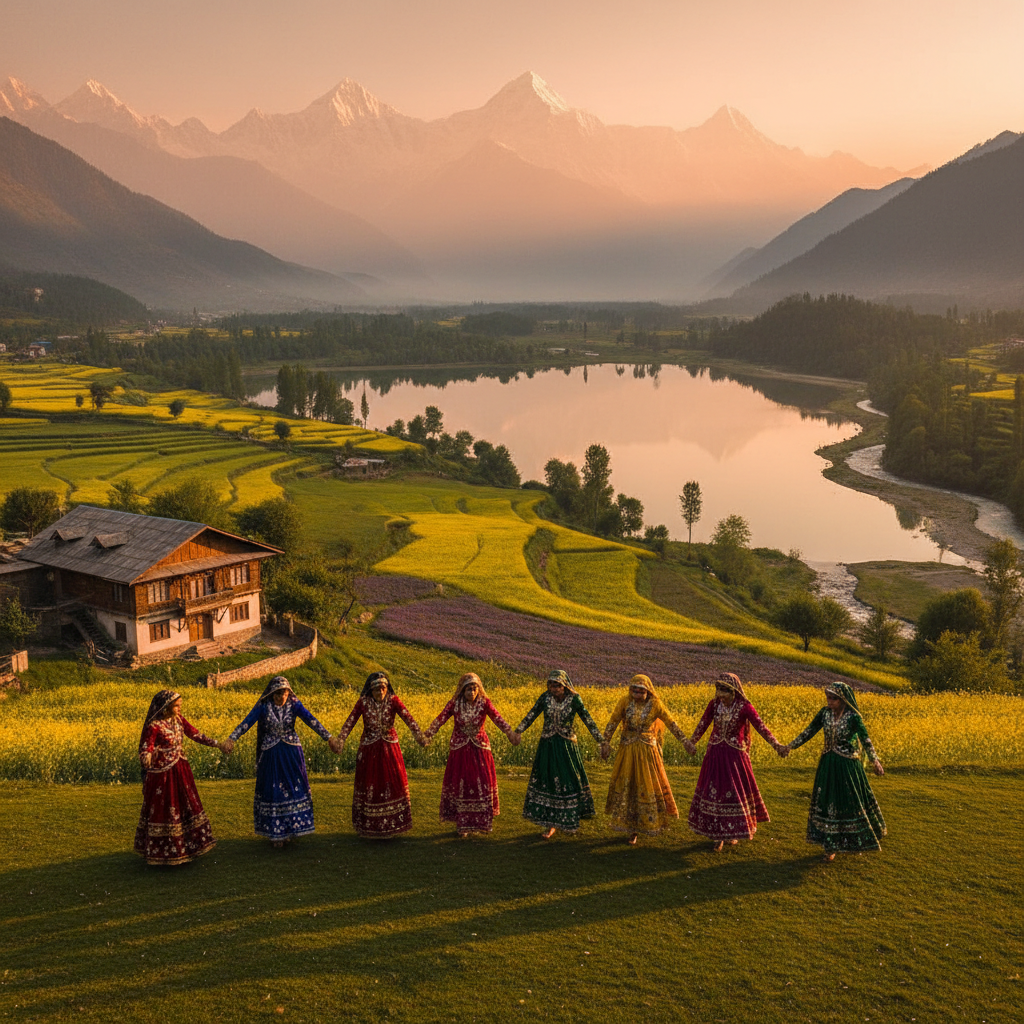
Discovering Rouf: The Soulful Folk Dance of Kashmir
Rouf, pronounced 'Ro-oof', is more than just a dance; it's a profound expression of Kashmiri culture, deeply rooted in the daily lives and festive celebrations of the Valley. Originating from ancient Sufi traditions, this communal dance form embodies the spirit of Kashmir – graceful, serene, yet incredibly vibrant. Unlike some high-energy folk dances, Rouf is characterized by its subtle, synchronized movements, performed primarily by women during various auspicious occasions. It's often seen during Eid, weddings, and harvest festivals, serving as a social gathering where women share stories, sorrows, and joys through their collective movements and singing. The dance is performed in two rows, facing each other, with dancers taking steps forward and backward while rhythmically chanting poetic verses known as 'Chakri' or 'Rufiana'. The beauty of Rouf lies in its simplicity and the deep emotional connection among the performers. It’s a dance that truly captures the soul of the Kashmiri people, reflecting their resilience, grace, and rich artistic heritage. For any visitor to Kashmir seeking an authentic cultural experience, witnessing a Rouf performance is an absolute must, offering a window into the heart of the Valley.
The Origins and Evolution of Rouf Dance
The history of Rouf dance is as old as the Kashmiri folk traditions themselves, with its roots tracing back centuries. While its exact origin remains debated, many scholars link it to the Sufi mystic traditions that flourished in Kashmir, influencing its artistic and cultural expressions. The dance is believed to have evolved from a form of religious chanting and communal singing, gradually incorporating synchronized body movements. Initially, Rouf was a spontaneous expression of joy and community bonding, performed without elaborate costumes or stages. Over time, it developed into a more structured folk art, maintaining its essence of simplicity and collective participation. Historically, Rouf was predominantly performed by rural women, especially during agricultural festivities and religious holidays. It was a way for them to express their emotions, share folklore, and maintain social cohesion within their communities. Even today, despite the influences of modern entertainment, Rouf has preserved its traditional form, passed down through generations. While its accessibility to tourists might have increased, the core spirit of Rouf as a community-driven, heart-felt performance remains unchanged, showcasing the enduring cultural legacy of Kashmir.
Understanding the Movements and Music of Rouf
The movements in Rouf dance are characterized by their elegance, restraint, and perfect synchronization. Performed in two rows facing each other, dancers gently sway their bodies, taking small, measured steps forward and backward. The rhythm is set by the dancers themselves, who sing the accompanying songs, often without any external musical instruments. This a cappella performance creates an intimate and raw experience, highlighting the purity of the human voice. The songs, known as Roufiana or Chakri, are typically folk poems and ballads, often narrating tales of love, separation, nature, or devotional themes. The tempo of the dance gradually builds up, starting slow and gaining momentum, only to gently subside, mirroring the ebb and flow of life. The core movement involves a slight bending of the knees, a subtle swaying of the torso, and coordinated footwork that creates a mesmerizing, rhythmic pattern. The beauty is not in flamboyant gestures, but in the collective harmony and the shared emotional expression of the group. It is a dance that celebrates unity and the collective spirit, making every performance a truly captivating spectacle to behold.
Traditional Attire for Rouf Performers
The costumes worn by Rouf dancers are an integral part of the performance, reflecting the traditional dress of Kashmiri women. The primary attire is the 'Phiran,' a loose, long tunic or gown, typically made from wool or cotton, depending on the season. Phirans are often adorned with intricate embroidery, particularly around the neckline and cuffs, showcasing the exquisite Kashmiri craftsmanship. Beneath the Phiran, women wear a 'Salwar,' loose-fitting trousers. The head is traditionally covered with a 'Tarang' or 'Kasaba,' a headscarf that can range from simple to heavily embroidered, often decorated with silver or gold thread and sometimes featuring a peak at the top, signifying a traditional Kashmiri Muslim woman's headwear. The colors of the phirans are usually vibrant, reflecting the natural beauty of the Valley, with shades of red, green, blue, and maroon being common. These traditional garments allow for ease of movement, while also adding to the grace and visual appeal of the dance. The collective sight of women dressed in their traditional finery, moving in unison, creates a truly enchanting and culturally rich visual spectacle.
Where and When to Witness Rouf Performances
Witnessing an authentic Rouf performance requires a bit of timing and local insight. While not a daily tourist spectacle, Rouf comes alive during major festivals and celebrations across Kashmir. The most opportune times are during Eid al-Fitr and Eid al-Adha, when women gather in homes and courtyards to celebrate with song and dance. Weddings are another prime occasion, particularly in rural settings, where the dance is performed to welcome the bride or celebrate the union. Harvest festivals, though less widely publicized, also feature Rouf performances as an expression of gratitude for a good yield. In Srinagar, cultural events organized by local tourism departments or cultural academies occasionally feature Rouf. Look out for notices or inquire with your Mid Holidays representative about any upcoming cultural programs. Sometimes, hotels or houseboats can arrange a special, albeit adapted, performance for guests, especially for groups. While these might not capture the full spontaneous essence of a community gathering, they still offer a valuable glimpse into this beautiful tradition. Engaging with local communities, perhaps through a guided village tour, can also increase your chances of experiencing Rouf in its most genuine form.
Experiencing Rouf as a Tourist: Tips for Engagement
For tourists, experiencing Rouf dance can be a truly enriching part of your Kashmir journey. The key is to approach it with respect and an open mind. If you are fortunate enough to be invited to a local wedding or a festival where Rouf is performed, remember to observe local customs. Women typically perform Rouf separately from men, especially in more traditional settings. Therefore, if you are a male tourist, it might be challenging to witness the performance up close in a communal setting, though some cultural shows might have mixed audiences. For female tourists, there might be opportunities to watch more intimately. Always seek permission before taking photographs or videos, and be discreet. The best way to engage is to simply immerse yourself in the ambiance, listen to the soulful singing, and appreciate the collective artistry. Engaging a local guide through Mid Holidays can significantly enhance your chances of finding authentic cultural experiences and understanding the nuances of such traditions. They can provide context and facilitate respectful interaction, ensuring your experience of Rouf is both memorable and culturally sensitive. Remember, Rouf is a communal celebration, so being present and respectfully observing is the best form of engagement.
The Cultural Significance of Rouf in Modern Kashmir
In an increasingly globalized world, Rouf continues to hold immense cultural significance for Kashmir. It serves as a powerful link to the past, preserving traditional melodies, poetic forms, and social practices. For Kashmiri women, Rouf is not just a dance; it's a space for bonding, storytelling, and maintaining their unique cultural identity. It provides a platform for intergenerational connection, as younger women learn the steps and songs from their elders, ensuring the tradition endures. In modern Kashmir, Rouf also acts as a cultural ambassador, representing the Valley's rich artistic heritage to the outside world. While some traditions face challenges of modernization, Rouf has shown remarkable resilience, adapting to contemporary contexts without losing its core essence. It reminds both locals and visitors of the depth and beauty of Kashmiri folk art, offering a serene counter-narrative to other perceptions of the region. As Kashmir continues to evolve, the gentle rhythms and soulful expressions of Rouf remain a steadfast symbol of its enduring cultural spirit and the peaceful grace of its people. Planning your Kashmir trip with Mid Holidays ensures you have opportunities to explore such deep cultural facets.
Related Kashmir Guides & Services
<p>Planning the rest of your trip? These Mid Holidays guides pair well with this article:</p><ul><li><a href="/blog/kashmir-sufi-music-concert-guide">Kashmir Sufi Music Concert Guide: A Soulful Journey</a></li><li><a href="/blog/kashmir-wazwan-food-guide">Kashmir Wazwan Food Guide: A Culinary Journey with Mid Holidays</a></li><li><a href="/blog/pampore-saffron-fields-visit-guide">Pampore Saffron Fields Visit Guide: Kashmir's Golden Bloom</a></li><li><a href="/blog/warwan-valley-tour">Warwan Valley Tour: Your Ultimate Guide to Kashmir's Hidden Gem</a></li><li><a href="/blog/kishtwar-travel-guide-kashmir-hidden-paradise">Kishtwar Travel Guide: Explore Kashmir's Hidden Paradise with Mid Holidays</a></li></ul>
Frequently Asked Questions
Is Rouf dance performed by both men and women?
Traditionally, Rouf dance is primarily performed by women in Kashmir. It is a communal folk dance that brings women together for celebrations like Eid, weddings, and harvest festivals. While there might be some contemporary interpretations or stage performances that involve men, the authentic and traditional Rouf is almost exclusively a women's dance form, emphasizing their collective expression and joy within their community.
Are musical instruments used during a Rouf performance?
In its most traditional form, Rouf dance is performed without any external musical instruments. The dancers themselves provide the music through their synchronized singing of folk poems and ballads, known as 'Roufiana' or 'Chakri'. This a cappella style creates a very intimate and soulful atmosphere, focusing entirely on the purity of the voices and the rhythmic movements of the dancers.
What kind of songs are sung during Rouf dance?
The songs sung during Rouf performances are typically traditional Kashmiri folk poems and ballads. These 'Roufiana' or 'Chakri' often cover themes of love, separation, the beauty of nature in Kashmir, and devotional or spiritual narratives. The lyrics are deeply evocative and reflect the cultural values and emotions of the Kashmiri people, adding a profound layer to the dance.
Can tourists participate in a Rouf dance?
While tourists are generally welcome to observe Rouf performances, direct participation is usually not expected or encouraged, especially in traditional community settings. Rouf is a dance passed down through generations within communities. However, if you are invited by locals to a celebration, you might be encouraged to join in a simple, respectful manner. Always follow the lead of your hosts.
What is the best way to ensure I see a genuine Rouf performance?
To witness a genuine Rouf performance, planning your visit around major Kashmiri festivals like Eid is ideal, as the dance is integral to these celebrations. Engaging a local guide or tour operator like Mid Holidays can significantly help. They often have connections within local communities or are aware of cultural events where authentic performances are likely to occur, offering you a more immersive experience.
What is the difference between Rouf and other Kashmiri folk dances?
Rouf is distinct from other Kashmiri folk dances by its specific movements and presentation. It is characterized by graceful, synchronized steps performed in two rows, primarily by women, with dancers singing their own accompaniment. Other dances like Hafiz Nagma involve male musicians and a female dancer, while Bhand Pather is a traditional folk theatre with satire and music. Rouf is uniquely communal and introspective.
What is the typical duration of a Rouf performance?
The duration of a Rouf performance can vary significantly. In a traditional community setting, it might be an ongoing part of a celebration, with women singing and dancing for extended periods, taking breaks and resuming. For cultural shows or tourist presentations, it might be a condensed performance lasting from 15 to 30 minutes, showcasing the key elements of the dance.
Is Rouf dance performed outdoors or indoors?
Rouf dance can be performed both outdoors and indoors, depending on the occasion and weather. During festivals and weddings, it's common to see performances in courtyards, open grounds, or even on rooftops. Indoors, it might be performed in larger rooms or halls. The communal nature of the dance means it adapts to available spaces where women can gather and celebrate together.