Dogra Dynasty Jammu: A Mid Holidays History Guide
Kashmir History & Culture
Explore the fascinating Dogra Dynasty Jammu history with Mid Holidays. This guide covers their rise, rule, and lasting legacy in Kashmir, perfect for…
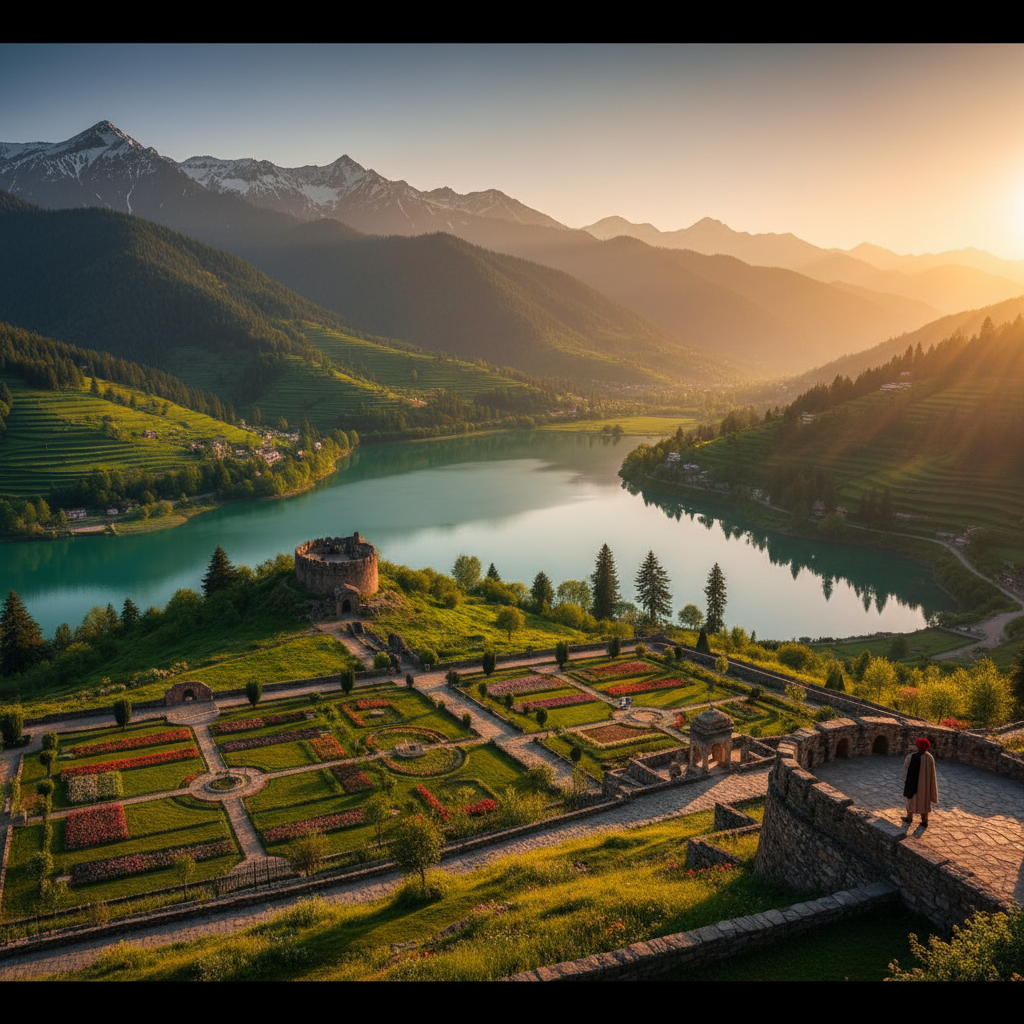
Unveiling the Dogra Dynasty Jammu: An Overview
The Dogra Dynasty, originating from the Rajput Dogra community in the Jammu region, played a pivotal role in shaping the modern history and geographical contours of Jammu and Kashmir. Their rule, spanning from the early 19th century until 1947, transformed a fragmented collection of principalities into a vast princely state, integrating diverse cultures and regions including Jammu, Kashmir, Ladakh, and Gilgit-Baltistan. This period is marked by significant administrative reforms, architectural marvels, and complex political manoeuvring, especially in the context of British colonial power in India. Understanding the Dogra Dynasty is crucial for anyone seeking to grasp the historical complexities and cultural tapestry of this unique part of the Himalayas. Their legacy is not just etched in old records but is visibly present in the forts, palaces, and administrative structures that still stand across Jammu, offering a tangible connection to their era. From their strategic alliances to their efforts in infrastructure development, the Dogra rulers left an indelible mark that continues to influence the region today. For travellers interested in delving deeper than just the scenic beauty, exploring the historical sites associated with the Dogra Dynasty offers a rich, immersive experience into a bygone era.
The Rise of Maharaja Gulab Singh: Founder of the Dynasty
The story of the Dogra Dynasty in Jammu truly begins with Maharaja Gulab Singh. Born in 1792 into a Dogra Rajput family in Anderwah, near Jammu, Gulab Singh's early life was spent serving in the army of Maharaja Ranjit Singh, the formidable ruler of the Sikh Empire. His military prowess, diplomatic acumen, and unwavering loyalty quickly earned him prominence. He rose through the ranks, eventually being appointed as the Raja of Jammu in 1822 by Ranjit Singh. However, it was the aftermath of the Anglo-Sikh Wars that presented Gulab Singh with an unprecedented opportunity. Following the First Anglo-Sikh War, the British, keen to weaken the Sikh Empire, negotiated the Treaty of Amritsar in 1846. This treaty, a landmark event, essentially 'sold' Kashmir to Gulab Singh for 75 lakh Nanak Shahi rupees. This controversial transaction, seen by some as a pragmatic move and by others as a betrayal, established Gulab Singh as the independent Maharaja of Jammu and Kashmir. His strategic vision and military campaigns further expanded his domain, incorporating Ladakh and Baltistan, thereby creating one of the largest princely states in British India. Gulab Singh's ability to navigate complex political landscapes and his ambition laid the foundation for the Dogra rule that would endure for over a century.
A Legacy of Development and Administration under Dogra Rule
The Dogra rulers, following Maharaja Gulab Singh, made significant contributions to the development and administration of the vast state of Jammu and Kashmir. Maharaja Ranbir Singh (1856-1885), Gulab Singh's son, was a visionary who focused on modernizing the state. He established a well-organized police force, introduced a proper judicial system, and even set up schools for education, moving beyond traditional religious seminaries. His reign also saw the expansion of the postal and telegraph services, connecting distant parts of the princely state. Economically, efforts were made to promote trade and agriculture, with attention given to irrigation projects. While some of these initiatives were nascent, they laid crucial groundwork for future progress. The Dogra period also saw significant construction, including the Ranbir Canal, which brought much-needed water to the dry plains of Jammu. The construction of roads and bridges, though challenging in the mountainous terrain, improved connectivity within the state. These administrative and infrastructural advancements, despite their imperfections and the challenges of governing such a diverse region, aimed to create a more cohesive and functional state apparatus. Travellers can still see remnants of this era in the impressive structures and historical records preserved in Jammu.
Architectural Marvels: The Dogra Imprint on Jammu's Landscape
The Dogra Dynasty left an indelible mark on Jammu's architectural landscape, transforming the city with grand palaces, temples, and administrative buildings that reflect a blend of Rajput, Mughal, and even European influences. One of the most prominent examples is the Mubarak Mandi Palace Complex, the royal residence of the Dogra kings. This sprawling complex, with its intricate carvings, grand courtyards, and diverse architectural styles, tells the story of centuries of history and successive additions by different rulers. While parts of it are in various states of preservation, its grandeur is undeniable. Another significant contribution is the Raghunath Temple complex, built by Maharaja Gulab Singh and further expanded by Maharaja Ranbir Singh. Dedicated primarily to Lord Rama, it is one of the largest temple complexes in Northern India, renowned for its seven shrines and rich collection of ancient texts and manuscripts. The construction of the Amar Mahal Palace, though completed later, also reflects the architectural sensibilities of the Dogra era, designed in the French Chateau style by a French architect. These structures were not merely functional; they were statements of power, faith, and the aesthetic tastes of the Dogra rulers, creating a distinctive character for the city of Jammu. Exploring these sites offers a visual journey into the Dogra period.
Cultural Patronage and Social Reforms
Beyond administration and architecture, the Dogra rulers were patrons of art, culture, and learning, and also initiated several social reforms. Maharaja Ranbir Singh, in particular, was known for his intellectual pursuits and his support for Sanskrit, Persian, and Dogri literature. He established a significant library, the Ranbir Sanskrit Research Institute, which housed thousands of rare manuscripts, making Jammu a hub for oriental studies. The Dogras also promoted traditional crafts and arts, encouraging local artisans. In terms of social reforms, efforts were made to curb social evils prevalent at the time. For instance, measures were taken to discourage female infanticide and sati (widow immolation), though such reforms often faced resistance and were gradual in their implementation. The rulers also introduced a land revenue system, which, while sometimes burdensome, brought a degree of order to agricultural practices. The development of new trade routes and markets also fostered cultural exchange and economic activity. While the Dogra rule was not without its criticisms and challenges, particularly regarding the welfare of the Kashmiri population, their efforts in cultural preservation and social betterment formed an important part of their overall legacy, contributing to the rich tapestry of Jammu's identity.
The End of an Era: Dogra Dynasty and India's Partition
The Dogra Dynasty's rule came to a dramatic end with the partition of British India in 1947. At the time, Maharaja Hari Singh, the last ruling Dogra monarch, faced an incredibly complex and precarious situation. As a princely state, Jammu and Kashmir had the option to accede to either India or Pakistan, or remain independent. Hari Singh initially harboured ambitions of an independent state, but events quickly overtook his plans. The invasion by Pakistani-backed tribal militias in October 1947 forced his hand. With his state under imminent threat, Maharaja Hari Singh signed the Instrument of Accession on October 26, 1947, formally acceding Jammu and Kashmir to India. This act was immediately followed by the Indian Army's intervention, preventing the complete takeover of the state by the invaders. The accession, however, became the root cause of the ongoing Kashmir dispute, a complex issue that continues to this day. While Maharaja Hari Singh technically remained the titular head of the state for a few more years, real power shifted to the elected government. The Dogra Dynasty's reign, which began with the ambition of Gulab Singh, thus concluded amidst the turmoil of a newly independent subcontinent, leaving behind a profound and often contested legacy that shaped the destiny of millions.
Exploring Dogra Heritage with Mid Holidays
For those captivated by the rich history of the Dogra Dynasty and eager to explore its tangible remnants, Mid Holidays offers expertly curated tours that bring this fascinating past to life. Our itineraries are designed not just to show you places, but to immerse you in the stories and significance behind them. Imagine walking through the ancient courtyards of the Mubarak Mandi Palace, feeling the echoes of royal decrees, or exploring the intricate shrines of the Raghunath Temple complex, understanding its deep spiritual importance. We can arrange guided visits to these historical sites, providing insights into the Dogra rulers' lives, their architectural prowess, and their contributions to the region's culture. Beyond Jammu city, our tours can extend to other areas influenced by the Dogras, allowing for a comprehensive historical journey. Whether you are a history buff or simply curious about the foundations of Jammu and Kashmir, our local experts will ensure a deeper understanding. We handle all logistics, from comfortable transport to knowledgeable guides, allowing you to focus entirely on discovery. Let Mid Holidays be your gateway to unlocking the captivating history of the Dogra Dynasty, offering a unique perspective on this incredible part of India. Feel free to reach out to us at kashmir.midholidays.in to craft your perfect historical adventure.
Related Kashmir Guides & Services
<p>Planning the rest of your trip? These Mid Holidays guides pair well with this article:</p><ul><li><a href="/blog/kashmir-photography-workshop-guide">Kashmir Photography Workshop Guide: Capture Paradise with Mid Holidays</a></li><li><a href="/blog/kashmir-wazwan-food-guide">Kashmir Wazwan Food Guide: A Culinary Journey with Mid Holidays</a></li><li><a href="/blog/kashmir-golf-courses-guide">Kashmir Golf Courses Guide: Tee Off in Paradise with Mid Holidays</a></li><li><a href="/blog/jammu-city-tourist-places-guide">Jammu City Tourist Places Guide: Unveiling the City of Temples</a></li><li><a href="/blog/kashmir-offbeat-places-2026-unveiling-hidden-gems">Kashmir Offbeat Places to Visit 2026: Unveiling Hidden Gems with Mid Holidays</a></li></ul>
Frequently Asked Questions
Who was the founder of the Dogra Dynasty and when was it established?
The Dogra Dynasty was founded by Maharaja Gulab Singh. He was appointed Raja of Jammu by Maharaja Ranjit Singh in 1822. However, the independent princely state of Jammu and Kashmir, under Dogra rule, was formally established in 1846 following the Treaty of Amritsar, where Gulab Singh acquired Kashmir from the British after the First Anglo-Sikh War.
What significant territories did the Dogra Dynasty rule over?
The Dogra Dynasty ruled over a vast and diverse territory that encompassed Jammu, Kashmir Valley, Ladakh, and Gilgit-Baltistan. This made it one of the largest princely states in British India, characterized by immense geographical and cultural diversity, from the plains of Jammu to the high-altitude deserts of Ladakh.
What is the Mubarak Mandi Palace Complex and its significance?
The Mubarak Mandi Palace Complex served as the principal royal residence of the Dogra rulers in Jammu. It's a sprawling complex showcasing diverse architectural styles reflecting centuries of construction and additions. Its historical significance lies in being the seat of power for the Dogra Dynasty for many generations, witnessing key political and social developments.
Did the Dogra rulers contribute to education and social reforms?
Yes, particularly Maharaja Ranbir Singh. He was instrumental in establishing schools, a judicial system, and postal services. He also promoted Sanskrit and Persian learning and initiated social reforms like discouraging female infanticide and sati, though these changes were often gradual and faced societal challenges.
How did the Dogra Dynasty's rule end?
The Dogra Dynasty's rule formally ended with the partition of British India in 1947. Maharaja Hari Singh, the last ruler, faced an invasion by tribal militias and acceded the state of Jammu and Kashmir to India on October 26, 1947, leading to the integration of the state with the Indian Union and marking the end of monarchical rule.
What are some prominent architectural landmarks built by the Dogras in Jammu?
Besides the Mubarak Mandi Palace Complex, another prominent architectural landmark is the Raghunath Temple complex. This large temple, primarily dedicated to Lord Rama, was built by Maharaja Gulab Singh and expanded by Maharaja Ranbir Singh. Its distinct architecture and numerous shrines make it a significant religious and historical site in Jammu.